BMI Calculator for Women Age – Healthy Weight by Life Stage
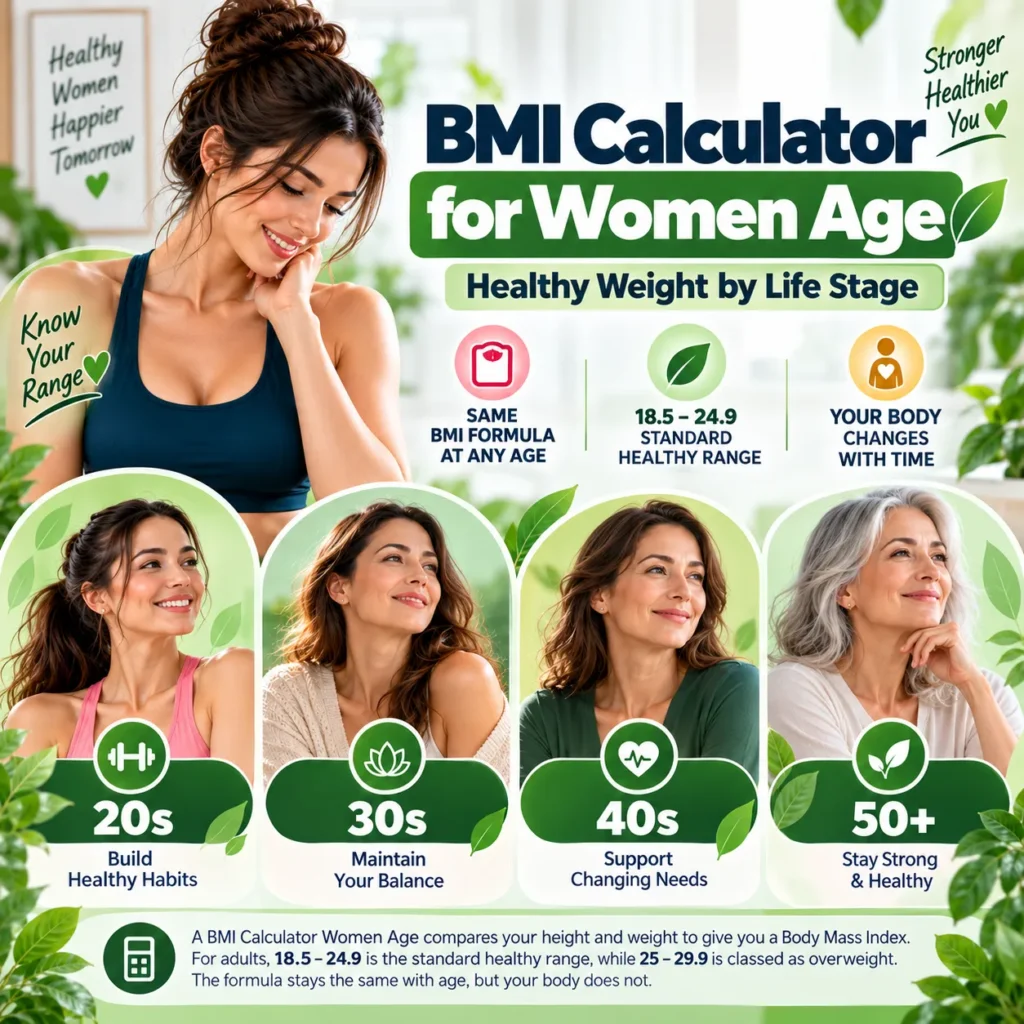
As you get older, figuring out a healthy weight for your age can get confusing. You may weigh nearly the same as you did years ago but notice a little more weight around your waist. Pregnancy, hormones, menopause, muscle loss, and daily habits can all change your body. A BMI Calculator Women Age compares your height and weight to give you a Body Mass Index. For adults, 18.5-24.9 is the standard healthy range, while 25-29.9 is classed as overweight. The formula stays the same with age, but your body does not. So, let’s see what your result can mean at different stages of life. If you want a standard baseline calculation first, try our main BMI calculator for women.
What Is the BMI Calculator Women Age?
Once age enters the conversation, BMI needs a little more context. A BMI Calculator Women by Age uses your height and weight to work out your Body Mass Index and place it within a general weight category. If your result is 23, it falls within the standard healthy adult range. But BMI cannot see whether more of your weight comes from muscle or fat. It also misses changes such as a growing waist or gradual muscle loss. So, you can use the number as a useful reference without expecting it to describe everything about your body.
BMI Calculator Female by Age: Check Your BMI
You only need a few details to check your BMI. The calculation is quick, but your age, body shape, and general health can help you make better sense of the number afterward.
BMI Chart for Women Age: Healthy Ranges by Life Stage
The healthy range for BMI does not just keep increasing every year. However, what is important to consider when you turn 25 may vary from what you need to consider when you are 50 or 70 years old. Below is a quick comparison.
|
Age |
Healthy BMI |
Changes You May Notice |
Also Consider |
|
20s-30s |
18.5-24.9 |
Pregnancy, lifestyle, muscle changes |
Fitness, waist size |
|
40s-50s |
18.5-24.9 |
Perimenopause, menopause, abdominal fat |
Waist size, muscle |
|
65+ |
18.5-24.9 |
Muscle and bone loss, frailty |
Strength, nutrition, mobility |
BMI for Women by Age: What Changes as You Get Older?
The BMI calculator for women at different ages follows the same simple formula through adult life, but your body constantly changes. You will have hormonal changes, muscle loss, and even fat accumulation in new areas. Because of that, your life stage gives the BMI number some much-needed context.
Women in Their 20s and 30s
If you are in your 20s or 30s, you will typically use adult BMI ranges. But an active, muscular woman looks completely different from someone who has the same BMI but not as much muscle mass. Pregnancy and the postpartum period can significantly affect your weight and figure. In addition to BMI, your level of physical fitness and waist circumference might matter too.
Women in Their 40s and 50s
Your 40s and 50s may be the time when you begin noticing changes that are not explained by the scale alone. Low levels of estrogen during the process of perimenopause and menopause are associated with increased fat storage around the abdomen. On the other hand, muscles gradually reduce as one ages. You may find yourself weighing the same as always but wearing different sizes in the midsection.
Women Age 65 and Older
At 65 years and above, the smallest figure on the Printable BMI chart will not always be the target you should strive to attain. Excessive loss of weight or muscle may start being a problem, especially where it impacts your health and movement. Attention to bone health should also be prioritized in this case. For an older female, her BMI Calculator Women Age should be evaluated together with her mobility, muscles, diet, and health.
How Aging and Hormonal Changes Affect a Woman’s Body Shape
Sometimes your clothes tell you that your body is changing before the scale does. Your waist might become fuller while your arms or legs seem less firm. Hormones are not the only reason for this, but they can be part of the change around midlife.
Final Words
The number you see on a BMI Calculator for women’s age can be helpful, but it makes more sense when you look at where you are in life. As you change and grow, things like muscle, hormones, waist circumference, bone density, and flexibility become important too. Therefore, it is more advisable to see BMI as just one aspect of your general health.