BMI Calculator Women Find Your Healthy Range
Weight can be a frustrating number, especially when it does not seem to match how your body actually looks or feels. You may exercise regularly and still see the scale move up. Age, pregnancy, menopause, muscle, and even normal changes in body shape can make things more confusing.
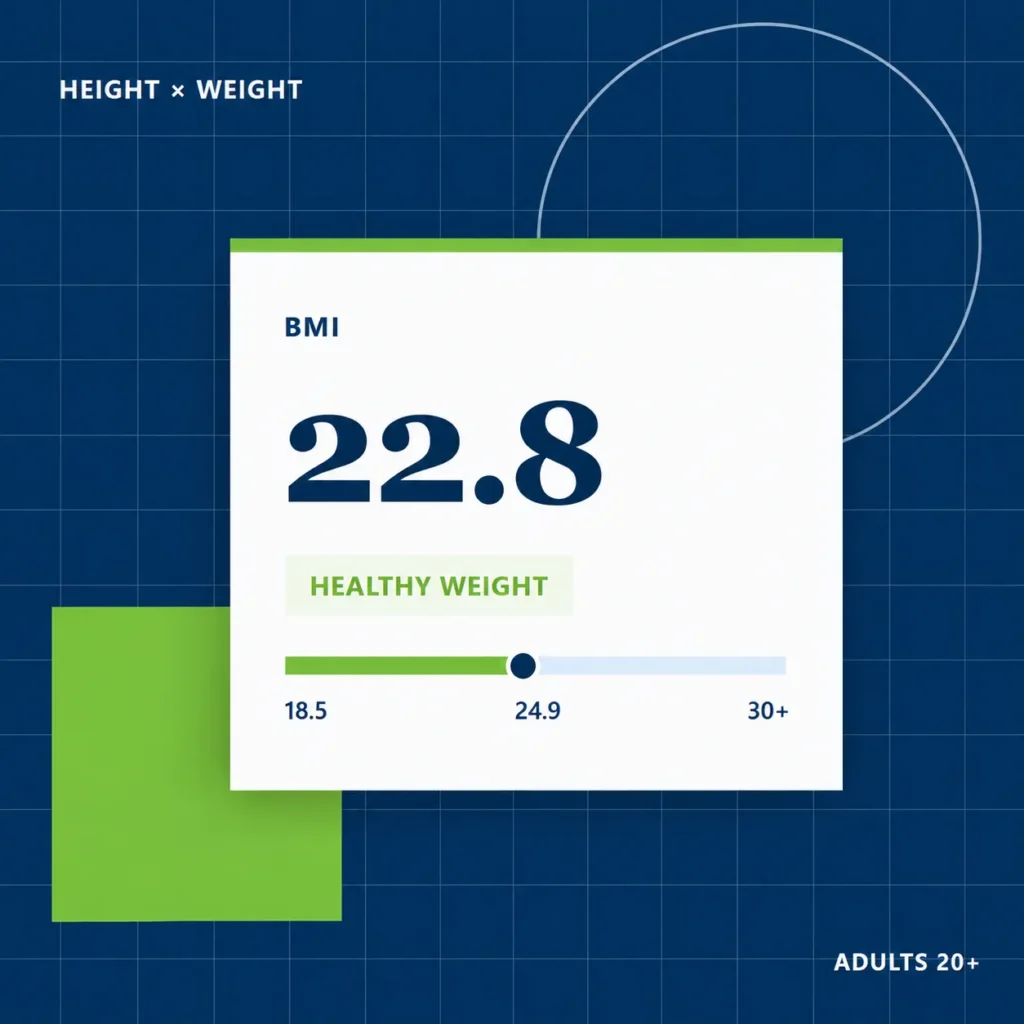
18.5 – 24.9
BMI Healthy Range
Height + Weight
Calculation
Adults 20+
For
< 10 Seconds
Calculation Time
So, when you are trying to work out whether your current weight falls within a generally healthy range, looking at pounds or kilograms alone doesn’t tell you much. Our BMI Calculator Women adds context by comparing that weight with your height.
You enter your basic measurements, and it calculates your Body Mass Index (BMI) and places the result into a general category, such as underweight, healthy weight, overweight, or obesity. For adults 20 and older, these BMI categories are used regardless of sex or age. Below, we go through the BMI Calculator Women calculation first and then look more closely at what your result may mean, including the parts of women’s health that a simple BMI number can miss.
BMI Calculator for Women
Calculate your BMI and see your healthy weight range in seconds.
| BMI Range | Category |
|---|---|
| Below 18.5 | Underweight |
| 18.5 – 24.9 | Healthy Weight |
| 25.0 – 29.9 | Overweight |
| 30.0 – 34.9 | Obesity Class I |
| 35.0 – 39.9 | Obesity Class II |
| 40.0+ | Obesity Class III |
BMI is a screening measure based on height and weight. It does not directly measure body fat, muscle mass, fat distribution, bone health, or overall health.
For women, factors such as pregnancy, menopause, age, muscle mass and body composition can affect how useful BMI is when interpreted on its own.
BMI is not intended to assess normal pregnancy weight changes.
This number uses the standard adult BMI formula, but adult BMI categories only apply to ages 20 and up.
For children and teenagers, BMI is interpreted using age- and sex-specific BMI-for-age growth charts rather than the fixed categories shown here. A pediatrician or growth chart is the right source for that interpretation.
How to Use the Body Mass Calculator Female: Formula & Step-by-Step Guide
You do not need several body measurements to find your BMI. Using a body mass calculator is a quick way to see how your current weight compares with your height. You only need a few basic details, and the calculation takes seconds. Once you have the result, you can compare it with standard BMI ranges to better understand where your weight falls.
Method: Calculate BMI for Women
Using a BMI Calculator for Women tool is much easier than working through the formula every time. There are only a few boxes to complete, and if your measurements are ready, the whole process takes very little time.
Select Your Measurement System
Start with the units you already know. If you normally weigh yourself in kilograms, metric will probably feel easier, while women who use pounds, feet, and inches can choose the US standard option.
Enter Height & Current Weight
Now enter your height and the weight you are currently seeing on the scale. Weight can shift slightly through the day, so if you track BMI over time, weighing yourself under similar conditions can make your comparisons more consistent.
Select Your Age
Some female BMI calculators include an age box even though age is not part of the standard adult BMI formula. You can still enter your real age because it may help provide context around the result, especially as body composition changes later in life.
Click Calculate
Once everything looks right, calculate the result. You should see your BMI number along with its weight category, so there is no need to work out where your score belongs yourself.
Calculate by Hand
Maybe you do not want to use an online BMI calculator women, or perhaps you simply want to know where the number comes from. Either way, the math is quite short once your height and weight are in the correct units.
The Metric Formula
If you know your weight in kilograms and height in meters, use:
BMI = weight in kg ÷ height in meters²
Suppose you weigh 62 kg and are 1.65 m tall. First, multiply 1.65 by 1.65, which gives 2.7225. Then divide 62 by 2.7225. Your BMI would be about 22.8.
The Imperial Formula US Standard
For pounds and inches, the calculation has one extra step:
BMI = weight in pounds ÷ height in inches² × 703
For instance, a woman weighing 150 pounds and standing at 65 inches tall will have a Body Mass Index of 25.0. BMI Calculator Women works similarly to calculate the Body Mass Index on the computer.
Understanding Your Results: What Does Your BMI Score Mean?
And now we get to the part that really matters: What does the number mean? For those aged 20 and above, BMI ranges for both sexes are very similar. But even if you fall into a particular category, it does not necessarily describe your fitness or your state of health.
|
BMI Range |
Health Category |
What It Means for Women |
|
Below 18.5 |
Underweight |
Higher risk for bone density loss, low estrogen, and irregular cycles. |
|
18.5 – 24.9 |
Healthy Weight |
Baseline standard with the lowest statistical risk for metabolic issues. |
|
25.0 – 29.9 |
Overweight |
Moderate risk, though frequently skewed by muscle or heavy breast tissue. |
|
30.0 – 34.9 |
Class I Obesity |
Signals increased metabolic strain on insulin sensitivity and joint health. |
|
35.0 & Above |
Class II & III Severe |
Higher cardiovascular risk; personalized medical guidance recommended. |
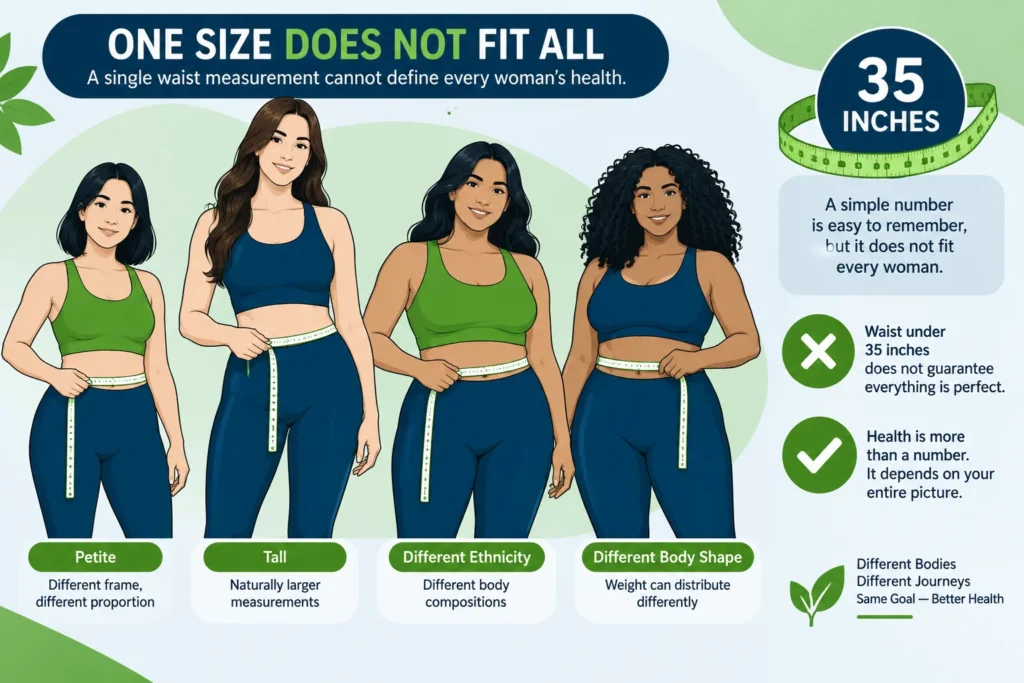
Beyond BMI: The 35-Inch Waist Rule: A BMI calculator women measures total weight, not body fat. For a complete health picture, check your waist; keeping it under 35 inches (88 cm) significantly lowers your risk of heart disease and type 2 diabetes, regardless of your scale number.
Body Mass Index Chart Female: Official Weight Ranges
Seeing a decimal like 23.7 or 31.2 can feel meaningless until you place it beside standard BMI categories. The chart below does exactly that. If you have already used BMI Calculator Women, find your result in the first column and read across.
|
BMI Range |
Weight Classification |
Meaning |
|
Below 16.0 |
Severe Thinness |
Weight is considerably low for height |
|
16.0-16.9 |
Moderate Thinness |
Weight remains below the healthy adult range |
|
17.0-18.4 |
Mild Thinness |
Close to, but below, the healthy range |
|
18.5-24.9 |
Healthy Weight |
Standard healthy BMI category |
|
25.0-29.9 |
Overweight |
Higher weight compared with height |
|
30.0-34.9 |
Obesity Class I |
First obesity BMI level |
|
35.0-39.9 |
Obesity Class II |
Second obesity BMI level |
|
40.0+ |
Obesity Class III |
Highest standard adult BMI category |
The lines of separation for these categories can be helpful as an initial screening tool, but the human body does not undergo a radical transformation just because the BMI value is 0.1 higher or lower on a particular scale. Take two women, one with a BMI of 24.9 and the other with 25.0.
How Age Affects Your Range
One misconception is that women require a totally new range for BMI upon reaching 30, 40, or 60 years old. Normal adult BMI classifications typically don’t vary based on each birthday. The only thing that changes here is our body; hence, the same BMI Calculator Women result would need to be interpreted differently at each stage of our lives.
Women in Their 20s and 30s
Many women have changed lifestyles in these years, like college, desk jobs, pregnancy, child rearing, lack of sleep, or even a new exercise routine. Your BMI category still uses the regular adult cutoffs, but it cannot explain why your weight changed. If you are pregnant, normal adult BMI categories are not used to judge the weight gained during pregnancy in the usual way.
Women in Their 40s and 50s
This is often when women say, “My weight is similar, but my waist isn’t.” Perimenopause, menopause, aging, activity, sleep, and gradual muscle loss can change body composition, and more fat may collect around the abdomen. Your BMI may barely move while your clothes begin fitting differently. For this reason, waist size and muscle strength can be especially useful alongside BMI during these years.
Senior Women 65+
But when someone gets older, it is not always better to be light. The reduction in weight through loss of muscle can lead to reductions in strength, stability, and self-sufficiency. A normal-looking BMI does not tell us whether the person is lean due to muscle or due to excess fat. Unplanned weight loss in an older woman is also something worth discussing with a healthcare professional rather than celebrating simply because BMI became lower.
Is BMI Accurate for Women? Key Limitations to Know
This is where BMI Calculator Women need a little perspective. The calculation is useful for screening large groups and giving individuals a quick reference, but female bodies have several differences that two numbers height and weight simply cannot describe.
Muscle Density vs. Body Fat
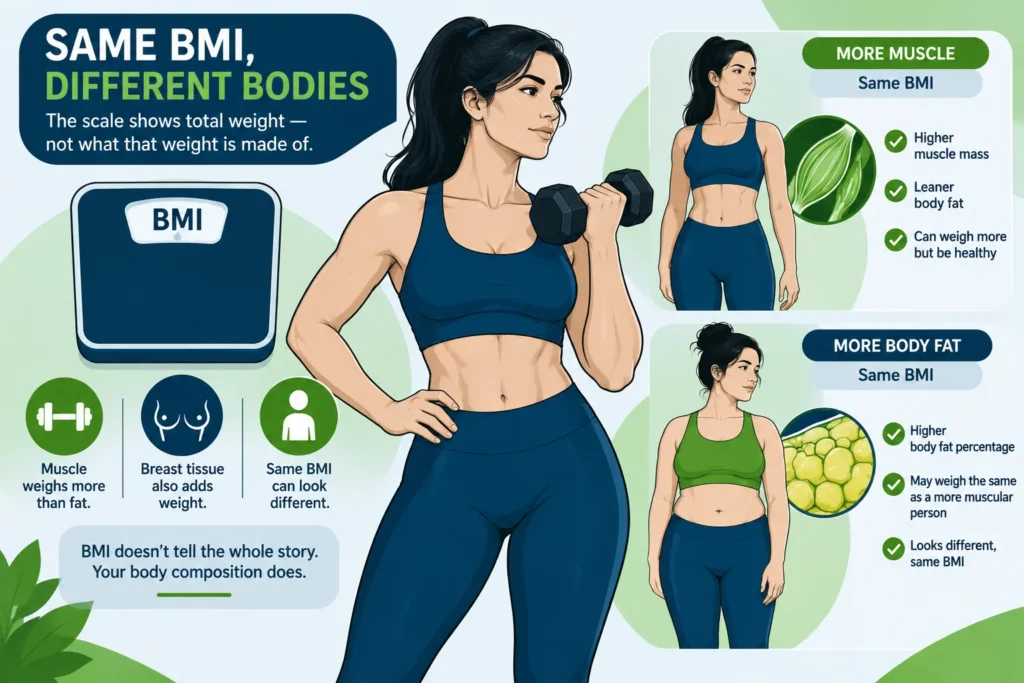
Let’s take two ladies of equal height, and both of them weigh 155 pounds. The lady who regularly exercises at the gym has more muscle mass in her body compared to the other lady with less muscle and more body fat. The BMI of both these ladies will be the same. This demonstrates how the BMI measurement may be deceptive.
Pregnancy & Postpartum
Weight gain during pregnancy is caused by factors not connected to merely adding more body fat. The factors include the baby, the placenta, amniotic fluid, added blood, and many others. After delivery, those changes do not disappear overnight either, so postpartum health should not become a race back to a prepregnancy BMI.
Hormonal Shifts & Menopause
Menopause does not rewrite the BMI formula. What can change, however, is the way a woman’s body stores fat, particularly around the middle. You might therefore have a similar BMI before and after menopause but notice a real difference in your waist and overall body shape.
Ethnic Variations
BMI does not reflect all the differences among populations. Studies have revealed that there is a variance in how BMI, body fat percentage, and metabolic risk factors correlate within different ethnic groups. This means that individual health history, family medical history, waist measurement, and other health indicators may be more informative than just the category itself.
Real Challenges Women Face with BMI: Scale Frustrations, Belly Fat & Others
Numbers are neat; real bodies are not. That is one reason women sometimes look at their BMI category and feel that it does not quite describe what is happening with their body. The following situations show where a BMI Calculator Women result may need some extra context.
Hard Tummy vs. Soft Tummy
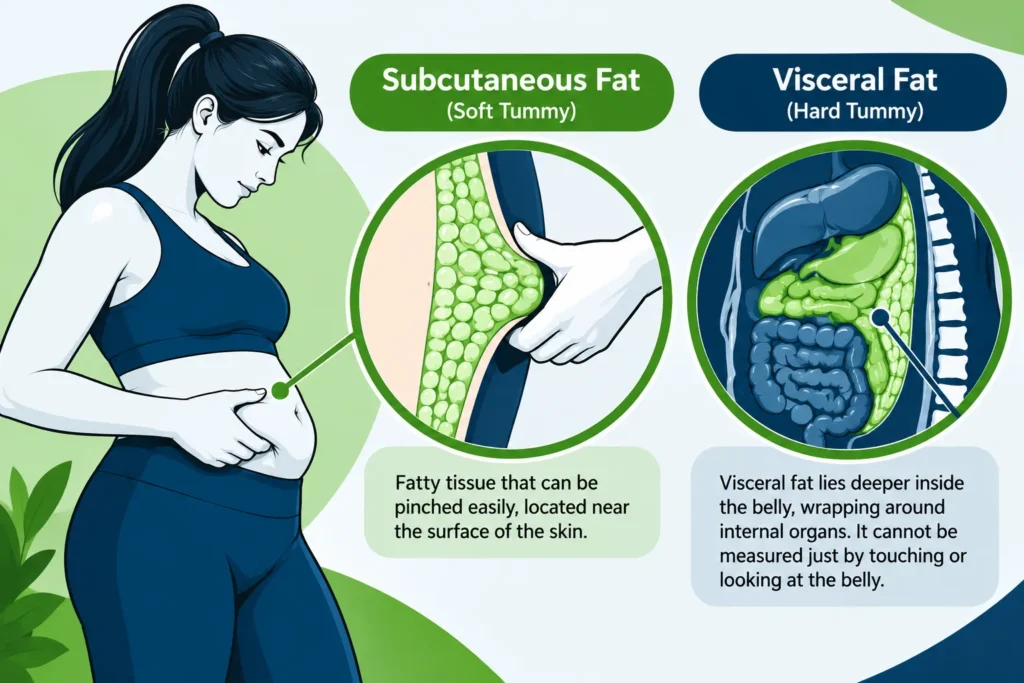
You have probably realized that not all belly fat is the same. Fatty tissue that can be pinched easily is mostly located near the surface of the skin, but visceral fat lies further away from the surface, deep inside the belly, and wraps around internal organs. One cannot measure the amount of visceral fat just by touching or examining the belly area visually.
Post-40 & Menopause Waist Expansion
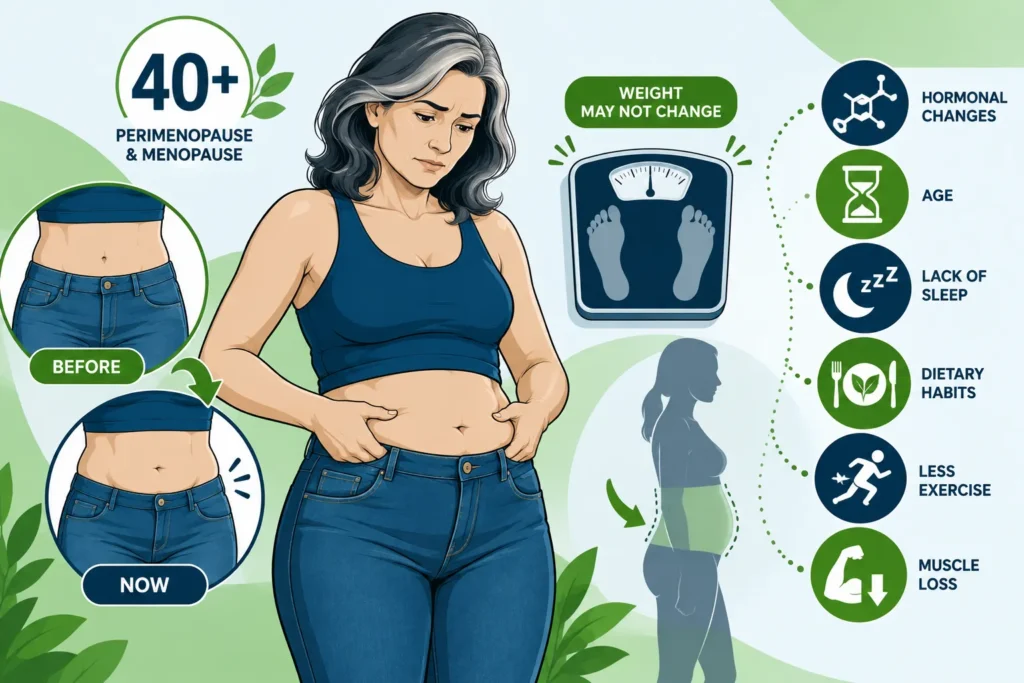
It gets frustrating when the scale shows no progress, yet your old jeans become more snug in the waist. Such an experience may occur to some women during their perimenopausal and menopausal period. While hormones may be a factor, age, lack of sleep, dietary habits, exercise, and muscle loss are factors to consider as well. Your BMI might remain relatively constant because there is no significant change in your body weight.
One-Size-Fits-All Waist Limits
The simple rule of 35 inches for the waist measurement is easy to remember. However, there is no one simple number that can be used for every woman’s body. A tall woman will be proportionally different from a small woman, as will be a person of another ethnicity. The same goes the other way: a waist under that mark does not guarantee that every health marker is perfect.
Muscle Density & Breast Tissue Flaws
Your bathroom scale cannot separate your body into clean sections. BMI Calculator Women takes that total weight and compares it with height without asking where any of those pounds came from. This can be particularly noticeable in women with substantial muscle because muscle adds weight even when body-fat levels are not high.
Skinny-Fat & Bone Loss Risks
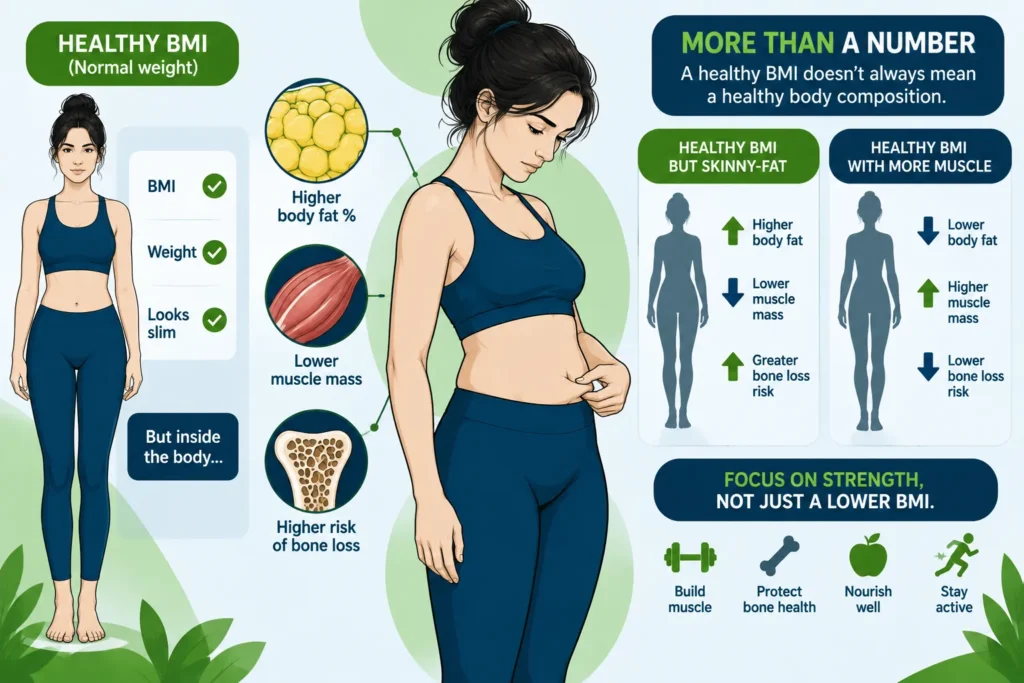
Being inside the healthy BMI range can feel reassuring, but there is another side to the story. A woman can have a relatively low body weight while also carrying little muscle and a higher proportion of body fat, sometimes casually described as “skinny-fat.” As we get older, protecting muscle and bone becomes more important, not less. So, the goal is not simply to make the number on the BMI Calculator Women as low as possible.
Final Words
BMI Calculator Women can quickly show where your weight sits in relation to your height and give you a general category to work from. Still, it cannot see your muscle, bone strength, pregnancy changes, menopause, fat location, or the many natural differences between women’s bodies. That is why looking at your waist, lifestyle, strength, and wider health can make the result far more meaningful. If a number seems unusual for your body or your weight has changed unexpectedly, a healthcare professional can help you to understand what may be behind it. In the end, BMI works best as a simple reference point, not a score that defines your body or your health.